
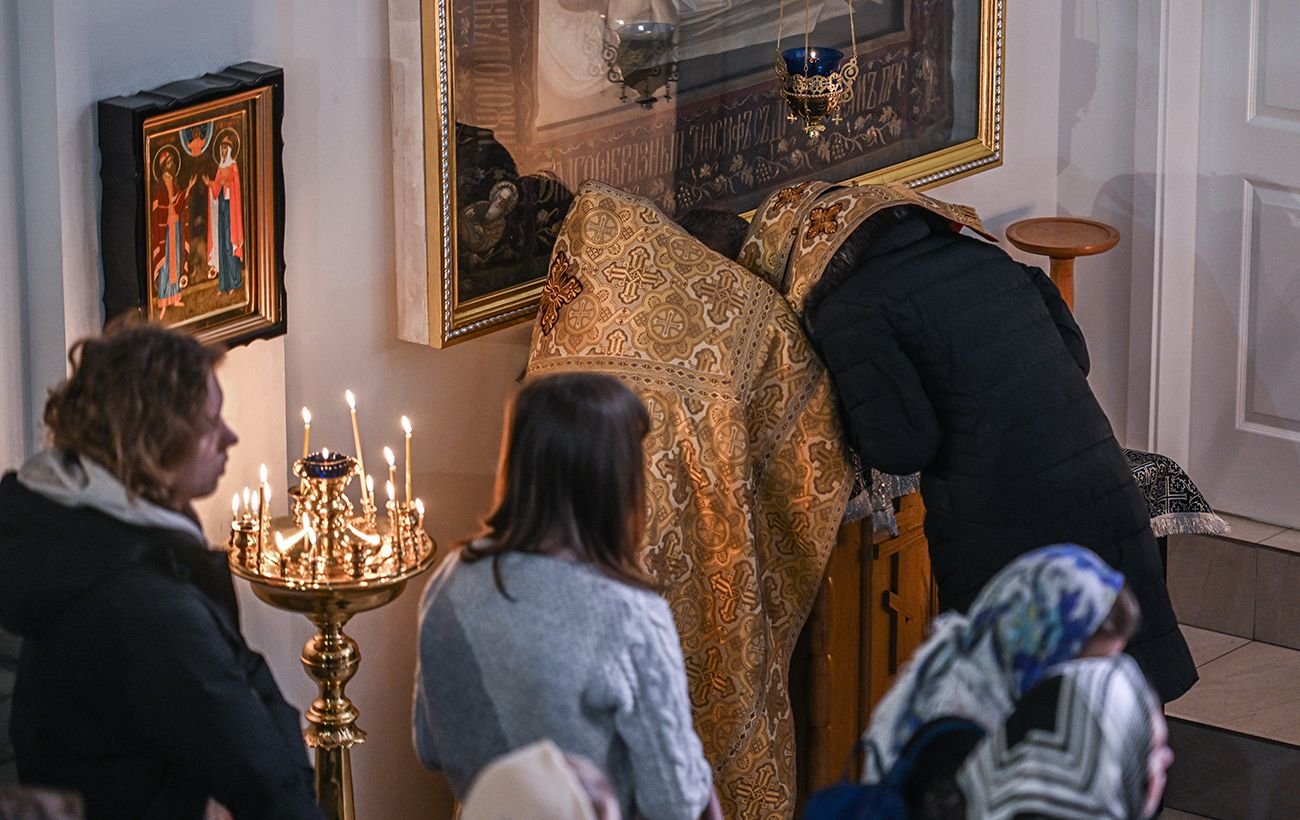
Repentance before the holiday: some consider it a duty, while others see it as superstition
Confession is often perceived as a mandatory ritual before major holidays. Therefore, the Orthodox Church of Ukraine (OCU) explained the true essence of this Sacrament and the “rules” believers should follow.
This was reported by RBC-Ukraine, citing a publication from the press service of the Orthodox Church of Ukraine (OCU) on Facebook.
Also read: April 5 or 12? When is Easter 2026 in Ukraine and where do the two dates come from
Main points:
- “Tied” to dates: confession is a free choice of a person at any time.
- Sincerity: no formal requirements can replace a genuine inner desire to repent.
- Empty “habit”: confessing once a year will not bring significant relief to a soul burdened by sin.
- Popular superstitions: a person’s faith is freedom, not an accumulation of invented prohibitions.
- Great Lent: this period is one of the best reasons to encourage oneself to repent.
Is confession “tied” to dates or events
According to the OCU, confession is directly not “tied” to:
- a specific date;
- a particular holiday;
- fasting days;
- any other church events.
 Confession is not “tied” to Easter (infographic: facebook.com/Orthodox.in.Ukraine)
What is confession and how is it performed
Ukrainians were informed that confession is one of the seven Sacraments of the Church, performed voluntarily and in the presence of God.
It is sanctified by the Lord’s grace and rewarded with the gifts of the Holy Spirit.
Confession is an external manifestation of our inner repentance.
No purely formal requirements or obligations can replace a sincere desire to repent, confess sins, receive forgiveness, and change one’s life for the better.
“For this is precisely the purpose of the Sacrament of repentance,” the OCU reminded.
A person should be encouraged to confess:
- their own spiritual call;
- the prompting of their heart;
- conscience;
- the desire to repent – to apologize, to reconcile with God.
What the Creator endowed each person with
“In general, it is strange to read or hear about various prejudices and invented prohibitions regarding the performance of church Sacraments,” the OCU stated.
It was clarified that the essence of the true Church’s existence is “far from a Pharisaical accumulation of invented prohibitions.”
“For Christian faith, at its core, is freedom in God! The Creator endowed humans with the great gift of freedom, which allows them to make choices for good and to use the opportunities given to them, directing them towards good,” the OCU reminded Ukrainians.
Will the Lord forgive everyone who comes to Him
The OCU reported that the Sacrament of confession is an expression of God’s love and mercy towards people.
It is noted that “The Lord is ready to forgive anyone who comes to Him with sincere repentance in their heart, of their own accord, at any time.”
“To confess (that is, to acknowledge, to reveal) one’s sins before the Lord in the presence of a priest and to ask for His forgiveness for the healing of the soul, which gives a person the strength to move forward, alleviating the burden of sins and changing them for the better,” the OCU clarified.
Are there “rules” regarding the number or frequency of confessions
Ukrainians were told that in reality, “there are no mandatory prescriptions regarding the number or frequency of confessions for a believer.”
At the same time, there are recommendations and traditions based on the spiritual experience of the Church.
“Common sense suggests that just like any lesson for a child conducted once a year will not provide much benefit for their education,” the OCU acknowledged.
Therefore, confessing only once a year (especially if done solely out of habit, without a genuine inner urge for change) will not bring significant relief to a soul burdened by the weight of sins.
“For there is no person who does not sin. And not a day goes by without a sin committed consciously or unconsciously. Therefore, one should confess and repent more often than once a year, at Easter,” the OCU emphasized.
When do believers traditionally go to confess
The OCU explained that according to pious tradition, believers may go to confess:
- before Holy Communion;
- during long fasting periods;
- on their birthday;
- on their angel’s day;
- before any significant life events.
This is because “confession helps find the right solution and get on the right path.”
“Of course, if someone has never confessed or does so very rarely, then for them the occasion of Great Lent is one of the best reasons to encourage themselves to repent,” the OCU noted.
And for “church-going believers, Great Lent, as a time of intensified repentance, is even more impossible to observe properly without confession and spiritual cleansing.”
“Our Church, like a loving mother, is always ready to help believers with their spiritual needs and problems. Therefore, we warmly invite everyone to all services, joint prayers, and participation in church Sacraments not only on certain holidays or events but as often as possible. The doors of our Church are open to all,” the OCU concluded.
Recall that earlier the OCU explained whether an online broadcast can replace a visit to the temple.
Additionally, Ukrainians were informed whether it is permissible to start new endeavors on major holidays.
Also read how to ask for a blessing from a priest and when exactly this can be done.


