
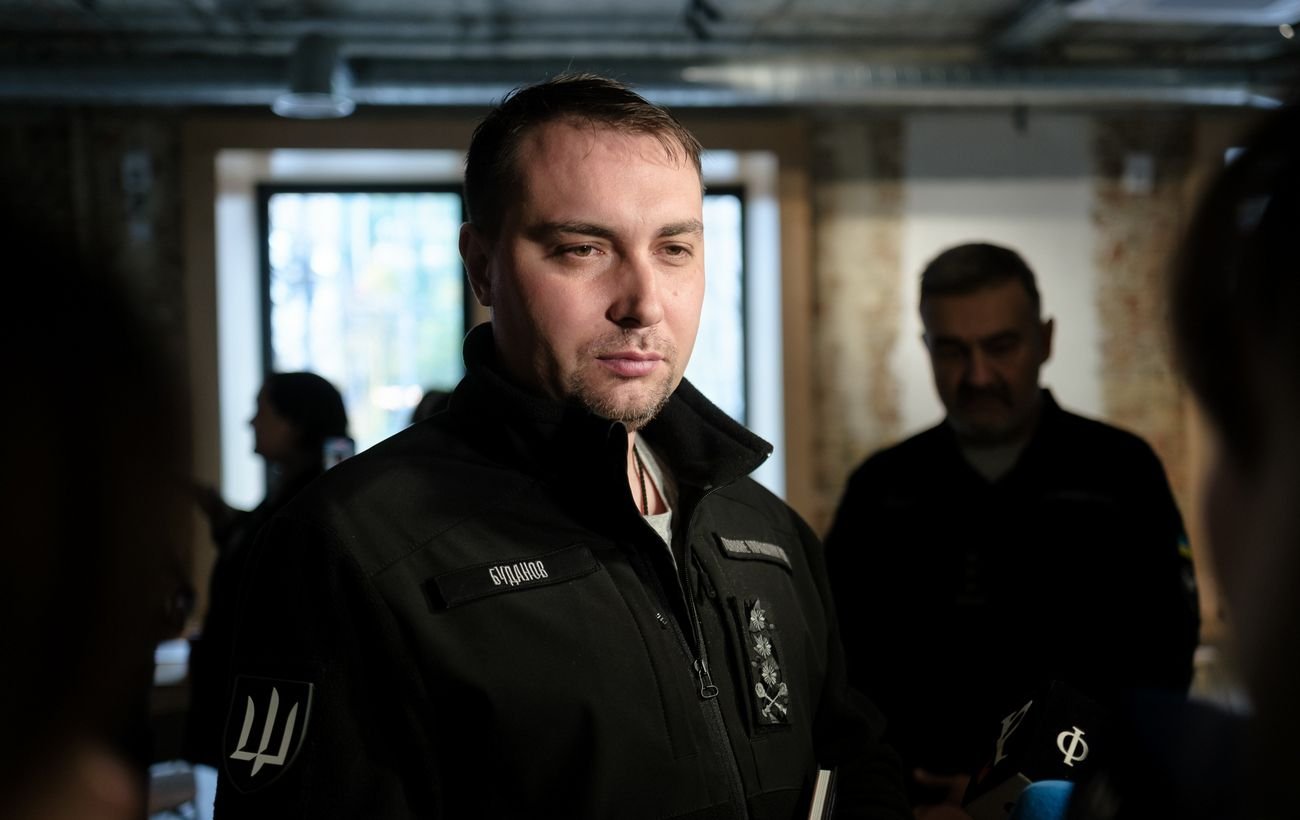
He is not sitting in Yermak’s office and delegates a lot. How Budanov changed the work in the Office of the President. [rbc.ua](https://rbc.ua)
What are the differences in the work of the current and previous heads of the Office of the President?
Kirill Budanov’s work as the head of the President’s Office is fundamentally different from that of his predecessor Andriy Yermak. He does not try to be everywhere at once and delegates a lot.
This is stated in the RBC-Ukraine article “100 Days in Power: How Budanov is Changing the President’s Office and Seeking Allies on Bankova.”
“Yermak’s functions over six years essentially corresponded to the status of a vice president who managed everything. Budanov does not do this and does not interfere everywhere,” a source in the Rada told the publication.
Budanov behaves quite differently in this position – this is agreed upon by all RBC-Ukraine sources in various government structures.
While his predecessor loved micromanagement and tried to get involved in everything from the national football team to relations with the Global South, the current head of the Office delegates tasks and does not try to be everywhere at once. Dozens of various working groups created and led by Yermak essentially ceased their activities with his departure.
Budanov chose Kuchma’s office
It is noteworthy that Budanov has settled not in the former office of Yermak, but in the office once occupied by the president’s friend and former assistant Serhiy Shefir, and even earlier – by former president Leonid Kuchma.
“Yermak was always either with the president or in his office. Budanov moves around the Office, attends reports to the president, and for large meetings, he needs to go to another spacious office on Bankova,” one of the publication’s sources explains.
The nature of the relationship with the direct supervisor, namely the president, is another difference between the former and current heads of the Office. While Yermak’s interaction with President Volodymyr Zelensky was largely based on informal trust and personal friendship, with Budanov’s appointment, this communication has become more formalized, institutional, and official.
Overall, their relationship is described as normal, with mutual respect in the boss-subordinate paradigm – this assessment was heard by RBC-Ukraine from several sources in power.
“Kirill has not yet integrated with the president’s temperament. Emotions need to align a bit more often, and they need to work more closely together. Andriy Borisovych was often on the fourth floor, while Kirill is exclusively there for business. This generally makes the relationship more work-oriented, which is not bad, as it gives the president more space,” shares one informed source close to Zelensky.
Relations with the President’s Office team
Budanov has not yet conducted large-scale personnel purges or updates on Bankova. A source from the publication states that the head of the Office coordinates the team, assigning them specific tasks.
For example, he sent his deputy for regional policy, Viktor Mykyta, directly “into the field” – that is, to the regions. Meanwhile, his deputy for legal issues, Iryna Mudra, is taking on some economic functions as the deputy chair of the Council for Supporting Entrepreneurship. Recently, Budanov has taken the lead of this Council.
In general, the relationship between the head of the Office and his deputies is described by sources as “constructive”. Along with regular meetings that Budanov holds with them, his “deputies” find it easier and quicker to communicate with him, says one source. Another source from the president’s team explains: Budanov approaches problems more focused.
“Kirill has a different style; he tries to coordinate his deputies more gently, holds regular joint meetings, and is significantly more accessible to staff. The president still makes the decisions. Overall, the Office is now more engaged not through one person, as before, but through different individuals. Kirill brings people along with him, meaning he can rely more on his deputies. The president interacts more with the deputies,” notes the source.
Conducting negotiations
In his new role, Budanov is forced to deal not with flashy operations like diversions against the enemy or the elimination of Russian war criminals, but with important yet routine matters such as veteran policy, memory policy, meetings with businesses, the restoration of destroyed housing, and similar issues.
“He continues to handle negotiation matters. On military and other important issues, he expresses his opinions and is consulted. As the head of the Office, he often comes to the president with a pile of documents, but this means that work in the Office continues and the papers are not left idle. It seems that he actually enjoys tackling issues that have long been unresolved,” shares a source from Zelensky’s team.
Recall that Budanov stated that the situation in the Verkhovna Rada is merely a problem that has already been overcome, not a crisis. According to him, the leadership of the Office has held personal meetings with MPs and agreed on further cooperation.
Additionally, the head of the Office mentioned that Western partners had approached Ukraine with a request to cease strikes on Russian oil terminals; however, Kyiv continues to act in its own national interests.


