
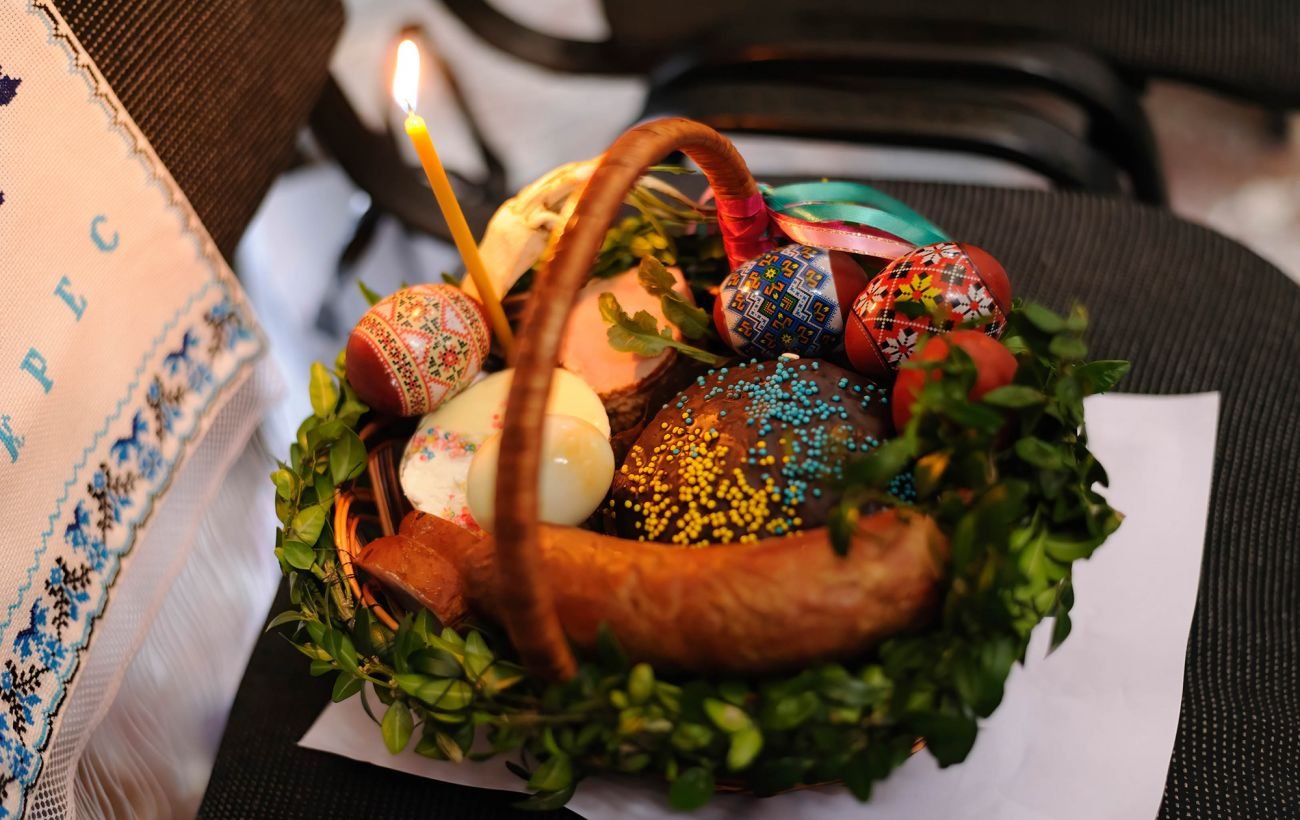
Not just religion: why even atheists in Ukraine celebrate Easter (survey results)
Ukrainians Share Their Associations with Easter Amid War
Easter in Ukraine during wartime does not lose its significance; on the contrary, it acquires new meanings. For most Ukrainians, this holiday remains important, increasingly blending religious, cultural, and family values.
This is reported by RBC-Ukraine, citing the results of a survey conducted by the research company Gradus.
Read also: There is a threat of terrorist attacks during Easter: SBU appeals to Ukrainians with an important request
Main points:
- Widespread: 95% of Ukrainians celebrate Easter, making it one of the most popular holidays in the country.
- Meanings: A third of respondents consider the holiday religious, a quarter view it as family-oriented, and one in four perceives it as a cultural tradition.
- Church and safety: 62% of citizens plan to visit a church, while a third will refrain from visiting, particularly due to safety concerns.
- Format: The majority (68%) will stay home, either alone or with close friends and family.
- Emotions: The main association with Easter in 2026 is hope (44%), although people also feel fatigue and tension.
Almost All Ukrainians Celebrate Easter
According to the survey, 95% of Ukrainians celebrate Easter – one of the highest rates among all calendar holidays.
This level makes it not only a religious event but also a social phenomenon that unites even those who do not identify with a specific denomination.

How many Ukrainians celebrate Easter (infographic: Gradus)
Faith Remains Important, But Not the Only Factor
The majority of respondents identify as Christian:
- 35% – with the Orthodox Church of Ukraine;
- 28% – with Orthodoxy without specification;
- about 8% – Greek Catholics;
- about 8% – believers of the UOC (MP).
The share of atheists and agnostics has decreased from 15% to 11%.
At the same time, the study shows that religious identity is important but not the only lens through which the holiday is perceived.
Traditions, Family, and Culture
Most often, Ukrainians associate Easter with observing traditions, religious content, and family time. At the same time, a quarter of Ukrainians perceive it as a cultural holiday.

The significance of Easter for Ukrainians (infographic: Gradus)
If choosing one characteristic:
- A third considers it primarily religious;
- A quarter – family-oriented;
- 25% – a tradition rather than a religion.
Despite various interpretations, 84% of respondents agree that Easter is an important part of Ukrainian identity. It is one of the few holidays that combines cultural and religious meanings.
In 2026, Ukrainians most often associate the holiday with hope (44%), joy (28%), and calmness (18%). At the same time, there are also complex emotions – fatigue, tension, caution. This indicates that the holiday does not detach people from reality but helps them cope with it.

What emotions does Easter evoke in Ukrainians in 2026? (infographic: Gradus)
Will Ukrainians Go to Church?
About 62% of Ukrainians plan to visit a church on various days of Easter, including 39% on Sunday. At the same time, 34% of our country’s residents do not plan to go to church, and 15% are still undecided. One of the key factors for refusal is safety concerns.
As for the format of the celebration, this year most people plan to celebrate at home, among them:
- 38% will celebrate at home without guests;
- 30% – at home with family or friends;
- 14% – will visit others.
Traditional dishes remain unchanged – Easter bread and Easter eggs.
Why Even Non-Religious Ukrainians Celebrate
Among those who do not belong to any denomination:
- 52% perceive Easter as a cultural holiday;
- 42% – as a family tradition;
- 40% – as an occasion to gather with loved ones.
As sociologist Yevgenia Bliznyuk notes, Easter remains one of the most significant holidays that transcends religion. According to her, today it is not only about faith but also about family, traditions, and emotional support – a shared experience that unites Ukrainians even in difficult times.
Earlier, RBC-Ukraine reported on the strengthening of security measures during Easter. The police will operate in an enhanced mode, patrol near churches and places of gathering, and may conduct selective checks, urging citizens to follow safety rules and respond to alarms.
We also reported on how “Nova Poshta” and “Ukrposhta” will operate on April 12.


