
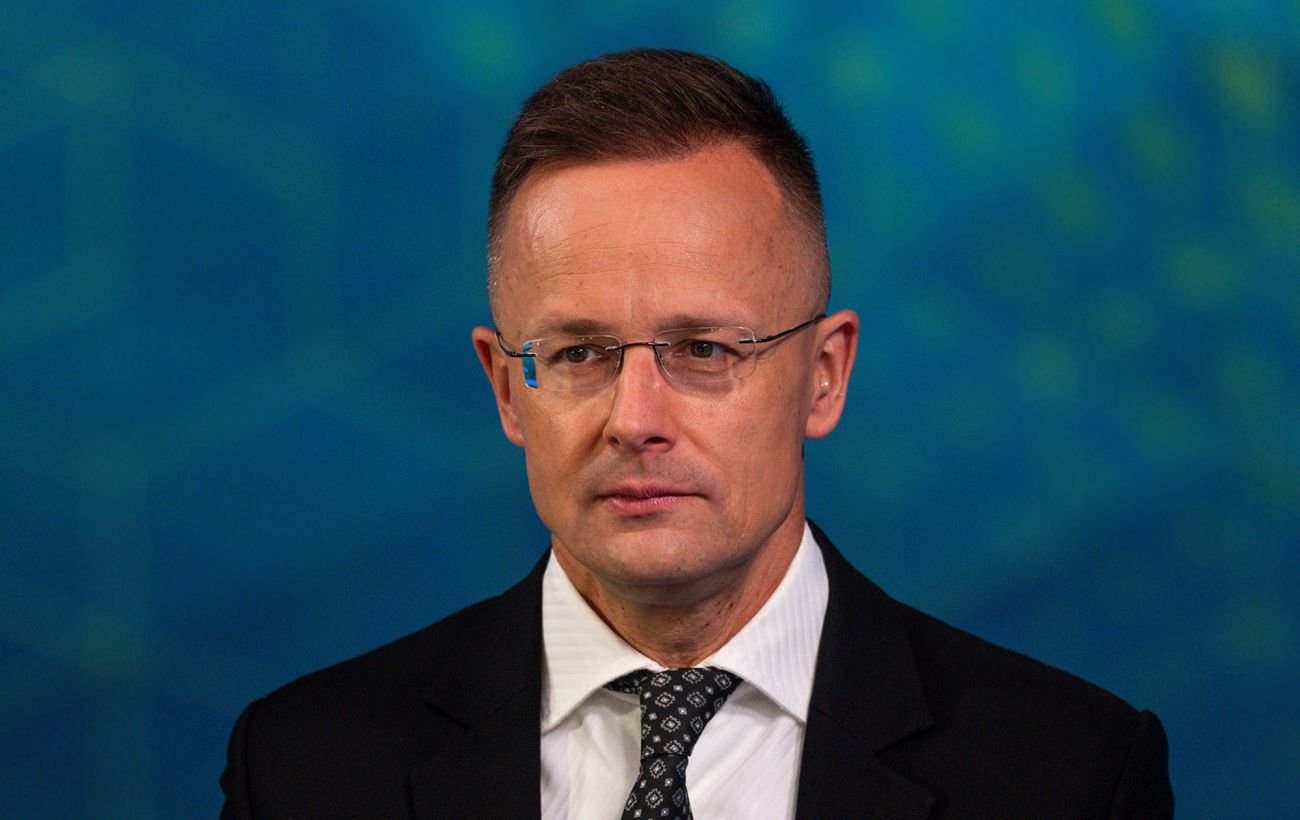
The head of Hungary’s Foreign Ministry announced attempts to create an “energy blockade”
Hungary’s Foreign Minister Peter Szijjarto claimed that Ukraine allegedly attacked the “Turkish Stream” gas pipeline again. According to him, this is a “very crude attack on Hungary’s sovereignty,” as energy security is the foundation of the country’s independence.
This was reported by RBC-Ukraine, citing Index.hu.
Also read: Orban called for the immediate lifting of sanctions on Russian energy
What Szijjarto said
Speaking at a political event in the town of Mezkovachhaza, Szijjarto emphasized that Ukraine is allegedly trying to “put Hungary under a complete energy blockade” amid the global energy crisis.
“This is a very crude attack on Hungary’s sovereignty because attacks on energy security, on energy supply security, are considered attacks on sovereignty,” the minister stated.
Szijjarto noted that the “Druzhba” pipeline, through which cheap Russian oil flows, is physically fully capable of transporting fuel to Hungary, but “the Ukrainians are blocking it.”
“We will, of course, protect ourselves and will fight for the use of cheap Russian oil and cheap Russian gas in Hungary because if we do not have that opportunity, then the preferential tariffs will come to an end, and the protected prices for gasoline will also come to an end,” Szijjarto declared.
According to him, if the preferential tariffs are abolished, utility payments for Hungarians will triple.
Context of the “Turkish Stream”
The “Turkish Stream” is a gas pipeline that supplies Russian gas across the Black Sea to Turkey and further to countries in Southern and Central Europe, particularly Hungary. Hungary relies on Russian gas, and Budapest has repeatedly opposed sanctions on energy imports from Russia.
Recall that parliamentary elections will be held in Hungary on April 12, which will determine the country’s course for the coming years. As noted by Politico, European politicians highly assess the chances of opposition candidate Peter Madyar, although his position on Ukraine may not differ from that of the current Prime Minister Viktor Orban.
Both politicians oppose military assistance to Kyiv and emphasize the importance of maintaining energy ties with Russia.
Amid this, the situation around the “Druzhba” pipeline, through which Russian oil flows to Hungary and Slovakia, has escalated. Ukraine’s decision to prevent an EU mission from inspecting this pipeline has divided and disappointed some EU countries.
To stop daily responses to “absurd statements” from Budapest, the Ukrainian Foreign Ministry launched “Hungarian Radio Ukraine.” This is a kind of round-the-clock trolling – an official channel where systematic rebuttals and facts debunking Hungarian propaganda are published.


