
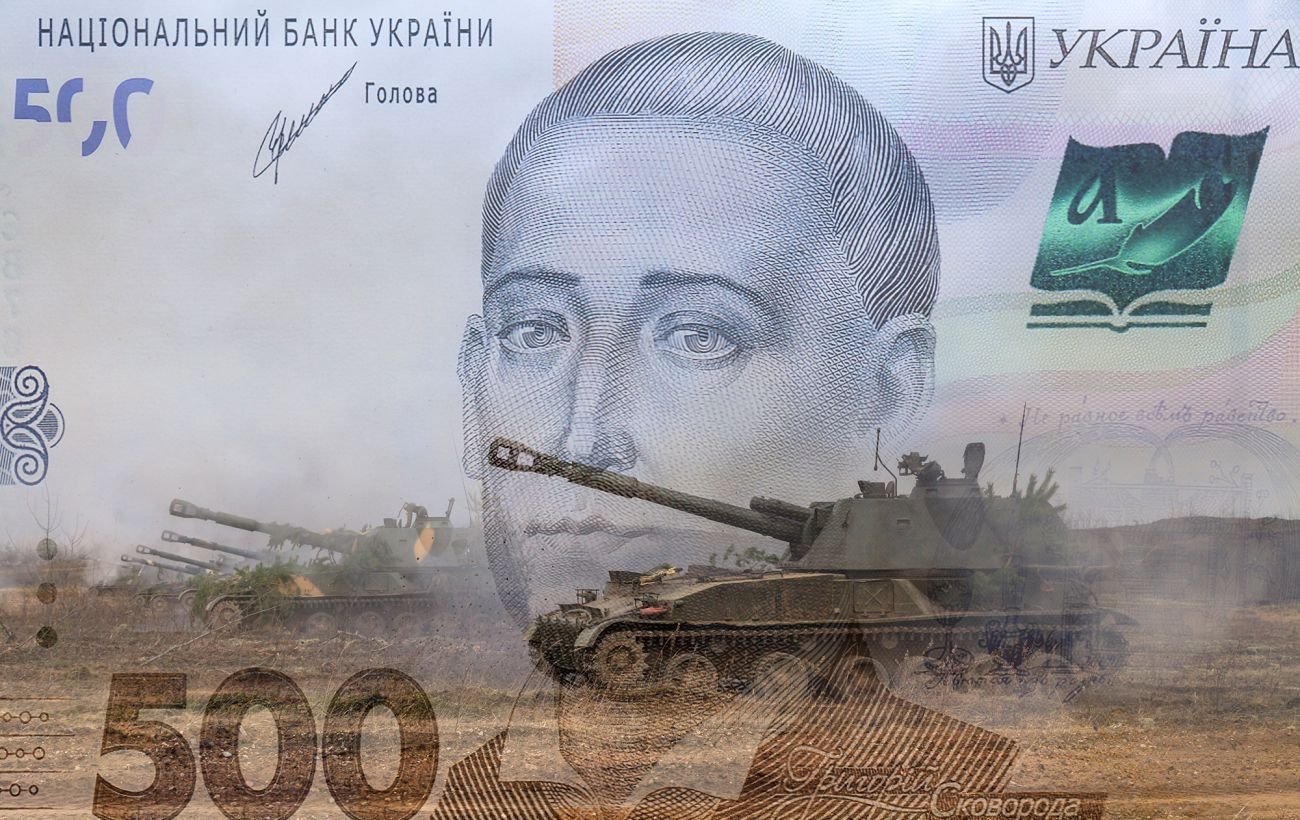
What prevents the country from making a technological leap and how to avoid the poverty trap?
Ukraine continues to live under the illusions of peacetime, hoping for a rapid post-war “economic miracle,” while reality demands tough decisions and total militarization of the economy.
RBK-Ukraine has gathered the main points from a lengthy interview with Doctor of Economic Sciences, Corresponding Member of the National Academy of Sciences of Ukraine, Sergey Korablin.
Also read: Corn cannot take down a “Shahed”: how Ukraine can escape the trap of primitivization – interview with the National Academy of Sciences
On the “trap of primitivization” and 30 lost years
Illusions of peacetime: The future of the country is often discussed as if the war has already ended, while in reality, people continue to die, cities are being destroyed, and the budget is lacking funds.
Diagnosis of the system: Nepotism cannot build a free country, and a bureaucratic vertical will never invent a smartphone.
Conditions for a technological leap: High technologies require a different social culture and unconditional adherence to laws and contracts, as is the case in Scandinavian countries.

Technological development is impossible in a country where corruption reigns (Infographic RBK-Ukraine)
On the myth of a “post-industrial economy”
Failure of deindustrialization: Ukraine has shamefully lost its powerful industrial potential from the early 1990s, having created nothing better in return.
Agriculture and IT are not enough: Surviving solely on the service sector, grain, rapeseed, or oil exports is impossible – the country critically needs a modern material industry.
On the “renaissance of state capitalism”
The end of the free market: Neoliberal policies and mass deregulation have become a thing of the past; a new mainstream is forming in the world – militarization of industry and strict protection of national interests.
The question of survival: For Ukraine, state recognition and financial support for priority sectors is a matter of physical survival.
On the defense industry as a new locomotive
Dependence on donors: Currently, about 45% of all defense expenditures in Ukraine are covered by external aid.
Weapons instead of agriculture: Since “corn cannot take down a drone or a missile,” industrial military development must become the absolute priority.
Realistic approach: Ukraine should not try to produce everything at once; it is better to focus on realistic projects, gradually increasing complexity, as Israel does.

Ukraine should focus on defense technologies, not the agricultural sector (Infographic RBK-Ukraine)
On resources and geopolitical “pressures”
Speculative image: Ukraine’s economy has never been considered investment-attractive, and its ratings have always been in the “speculative zone.”
How not to become a “quarry”: To attract giants like Volkswagen or Bayer, Ukraine must adapt EU regulations and offer exclusively attractive conditions, rather than waiting for the market to resolve everything on its own.
On the debt “red line”
Debts take a back seat: Although public debt has reached 98.4% of GDP, in the face of the threat of state destruction, the focus shifts to the effective use of these funds for defense.
Risk mitigation: Thanks to grace periods of EU programs (Ukraine Facility) and repayment of G7 loans (ERA) using frozen Russian assets, the debt burden is currently not excessive.
On the hryvnia and NBU policy
Rentier banks: Instead of lending to businesses (growth only at 3.1%), banks are investing hundreds of billions in NBU deposit certificates, turning into financial rentiers.
Threat after the war: When external financing decreases, a lack of domestic lending and currency shortages may provoke devaluation and inflation.

What strategic guidelines should the National Bank have (Infographic RBK-Ukraine)
On Eurointegration without “rose-colored glasses”
Lack of competition: Ukraine currently cannot compete with the EU in aircraft manufacturing or robotics, so success would be at least the localization of European productions.
The end of concessions: After the war, European partners will stop turning a blind eye to unmet obligations, and relations will shift to a tough pragmatic plane.
On the demographic sentence
Loss of personnel: Almost 6 million people have left the country, and estimates suggest that less than half plan to return, which is already creating a shortage of specialists.
Chance for return: The situation is not a death sentence; if decent living and working conditions can be established after the war, a reverse wave of migration is possible.
Final forecast
Forecasts are conditional: Making accurate predictions for 5-10 years during wartime is impossible.
Main risk: Rear scandals, corruption, and opaque procurement demotivate society and partners, questioning Ukraine’s ability to meet European standards.
Also read:
- EBRD has downgraded its growth forecast for Ukraine’s economy for 2026
- Prices in Ukraine will rise if individual entrepreneurs start paying VAT: blitz with an economist from KNEU


