
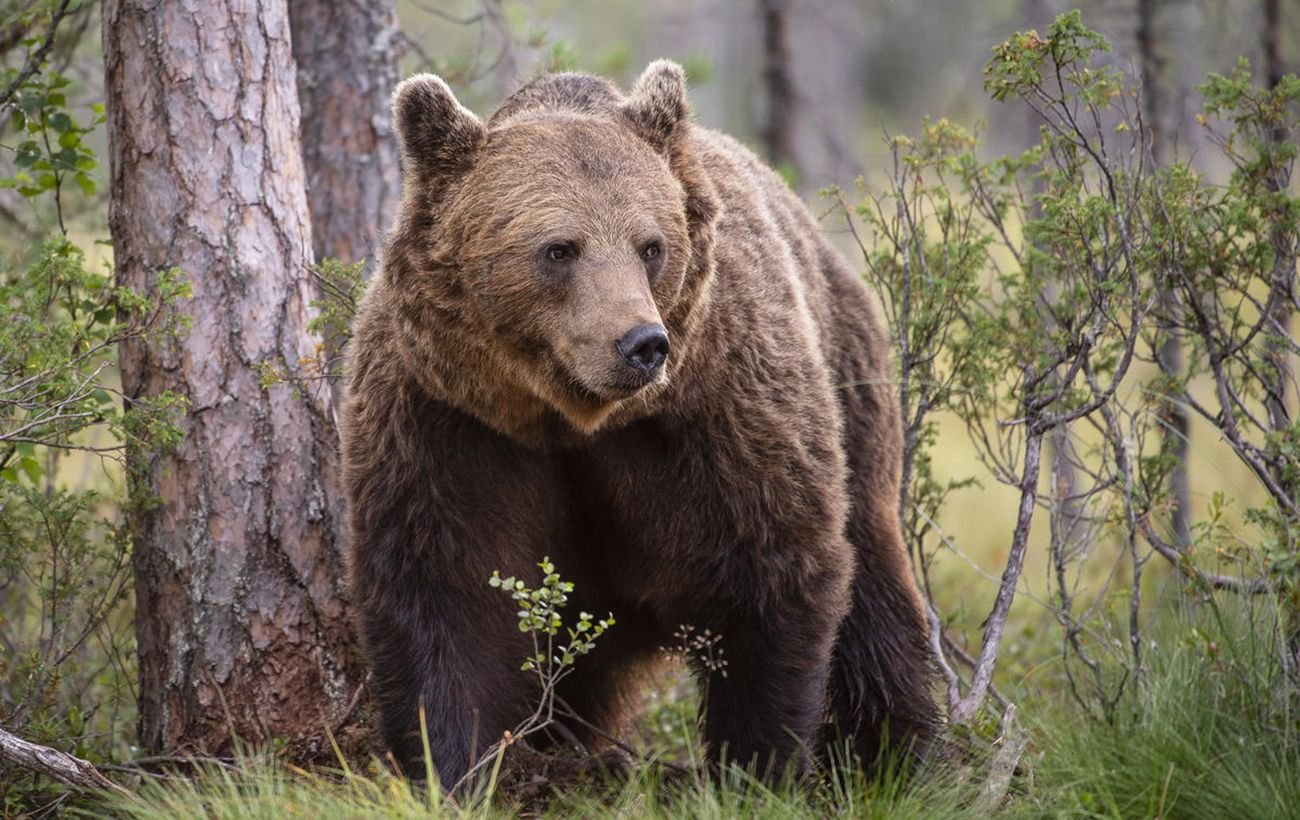
Bear cubs in the Carpathians captured on video: unique footage from a camera trap
How do bear cubs behave in the wild?
In the Carpathians, a mother bear and her cubs were captured on video. The new footage was obtained thanks to camera traps set up for scientific monitoring in the Uzhansky National Nature Park in Transcarpathia.
What you need to know about bears and whether they pose a danger to humans – read in the material by RBC-Ukraine below.
Also read: Truth or myth: 10 facts about bears that we believed since childhood
The footage shows a female bear with two one-year-old cubs and an older cub from last year, who helps keep an eye on the younger ones. The four of them stick together: the smaller cubs stay close to their mother, while the older bear keeps a bit of distance.
As noted by specialists from the World Wildlife Fund (WWF) Ukraine, the animals in the new video display characteristic behaviors of the species – curiosity and inquisitiveness.
Bears are intelligent animals. They carefully explore their surroundings, including the camera trap itself.
This mother bear with her offspring has been recorded in the region before – earlier, at the end of winter, she was also captured by camera traps in the park.
Mother bears give birth to cubs during hibernation
In the wild, mother bears usually give birth to cubs in January-February during their hibernation.
Contrary to popular belief, bears do not enter true hibernation. Their state is more accurately described as winter sleep, as they maintain full vitality and sensitivity, and in case of danger, they leave their den and wander through the forest in search of a new one.
Newborn bear cubs are very small – about 20-25 cm long and weighing approximately 500 g.
The female nurses them with milk for 4-5 months, and the cubs stay with their mother for up to three years. Often, last year’s cubs (usually also females) are present with the newborns – the so-called “helpers.” They even hibernate together in the same den.
At the same time, the first year of a cub’s life is the most challenging: the mortality rate among young bears can reach about 50%. Typically, the female gives birth to 1-2 cubs (although in favorable conditions, there may be more).
Bears and humans: the basics of coexistence
After waking from winter sleep, mother bears with cubs are particularly vulnerable. During this period, the animals are weakened and hungry, so they may approach human settlements more frequently in search of food.
Currently, official estimates indicate that there are about 350 brown bears living in the Ukrainian Carpathians. In recent years, they have also been periodically spotted in the Polissya region.
Bears do not see humans as prey and usually avoid encounters if they sense a person’s presence beforehand. However, the animal can pose a danger if it feels threatened for itself or its offspring. The greatest risk arises when encountering a mother bear with her cubs.
To prevent conflicts, WWF-Ukraine specialists recommend using proven and humane methods to protect farms. The most effective of these is electric fencing (electric pasture), which does not harm the animal but merely deters it and fosters a consistent avoidance behavior.
Additionally, in the valleys, herding dogs are used to protect livestock, alerting in advance to the approach of predators. Responsible waste management is also an important factor – food scraps and unauthorized dumps often attract wild animals.
A study by WWF-Ukraine in collaboration with the Verkhovyna National Nature Park (2018-2023) showed that the spread of electric fencing significantly reduces the number of conflicts. The proportion of farms that encountered them decreased from 29% to 17% over six years, although attacks on beehives remain the most common.
As part of this initiative, WWF-Ukraine has already provided 45 electric fences to communities in the Carpathian region. They have proven effective in protecting beehives, livestock, and farms, helping people and wildlife coexist without conflict.
Also read: Run or freeze: how to survive an encounter with a bear in the Carpathians


